
The Data Capacity Compass
Your guide to building stronger data practices, one tool at a time.
The Data Capacity Compass is your go-to resource for making data work for your nonprofit. Built with nonprofits, for nonprofits, it breaks the data journey into manageable steps—helping you strengthen your data practices and advance your mission.
Developed through Blueprint’s Practitioner Data Initiative, this free, self-guided toolkit can support you wherever you are in your data journey.
Building data capacity is a process, not a one-time project. The goal is building healthier data habits that strengthen over time.
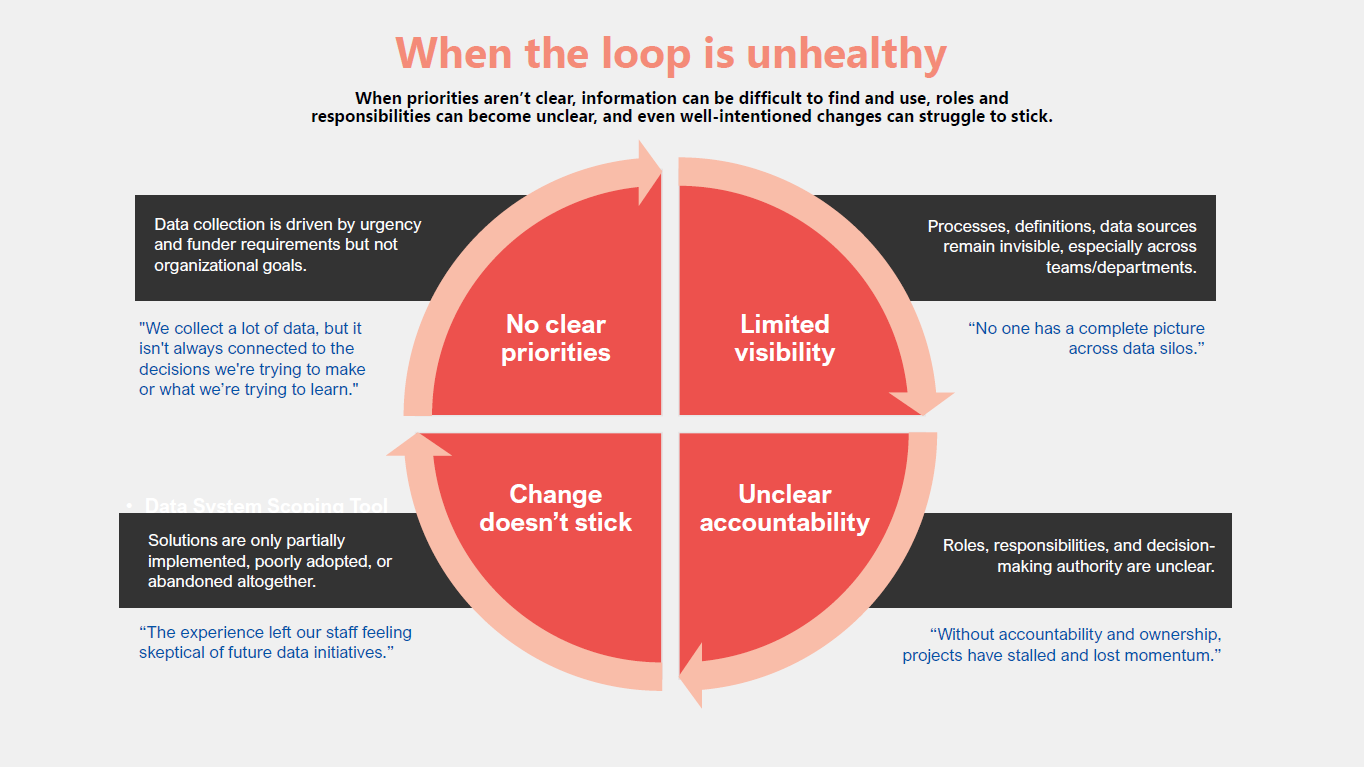
Working alongside nonprofits has shown us that data capacity is an ongoing cycle, with each part of your data practice reinforcing the others. Click the arrows below to explore the cycle and see how our toolkit can help you build healthier data practices over time.
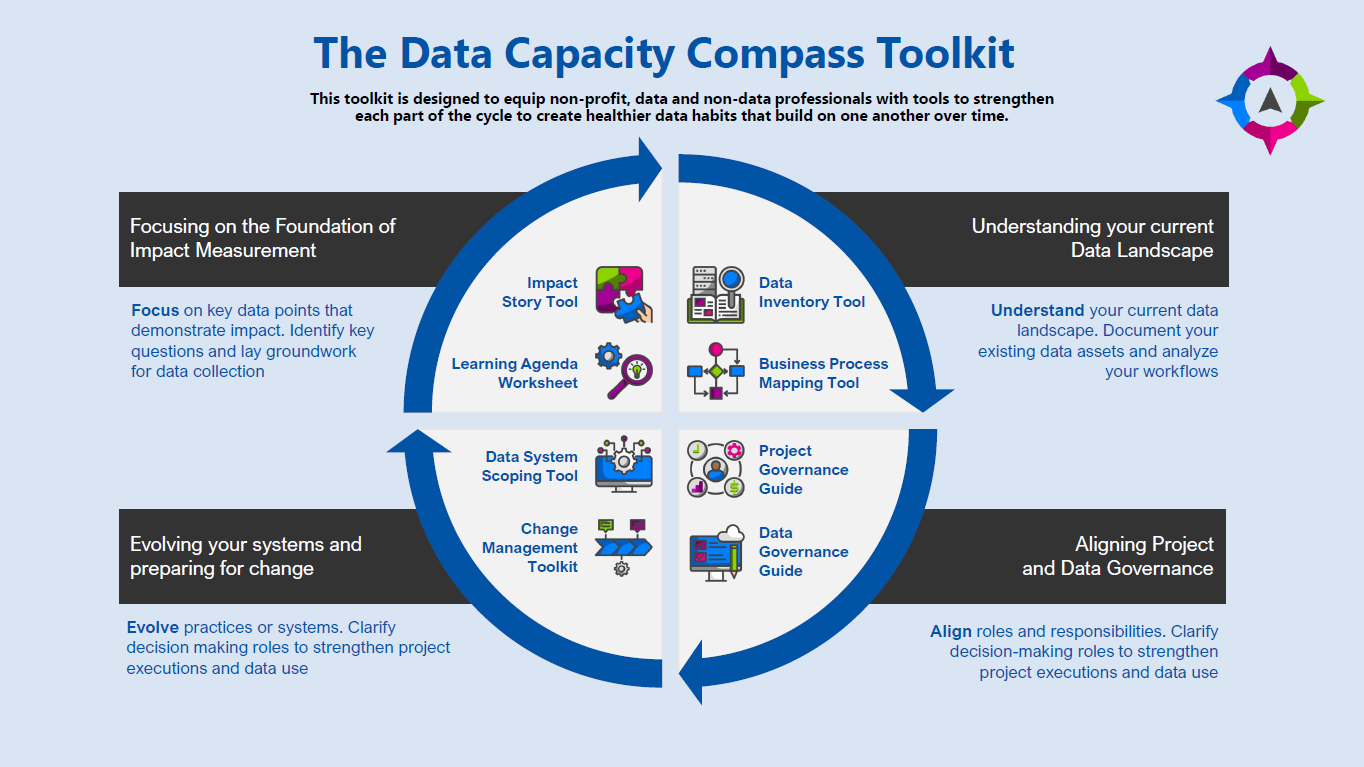
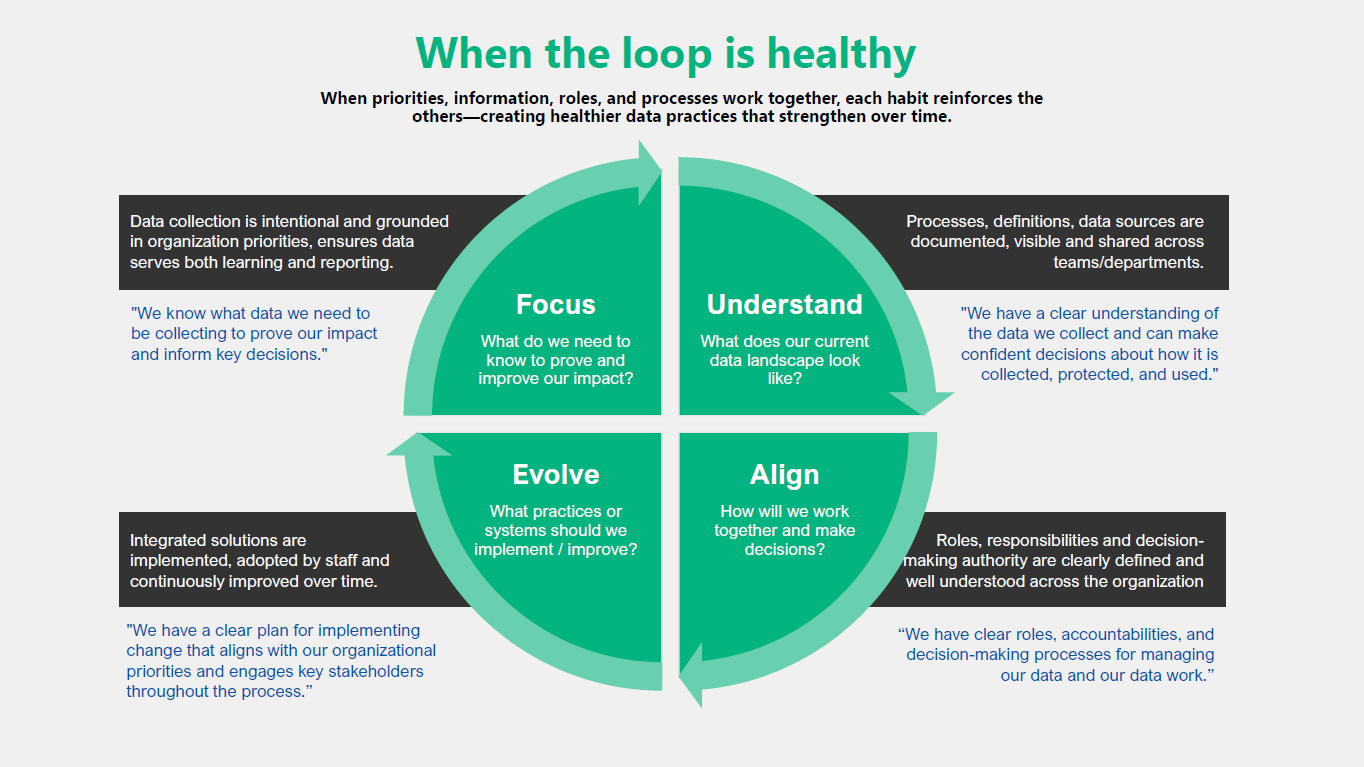
Focusing on the Foundations of Impact Measurement
Define your impact, identify key questions, and lay the groundwork for data collection.

Impact Story
A visual template designed to help nonprofits holistically map the journey clients experience from program participation and activities to ultimate impact. Think of it as a roadmap that connects daily work of your nonprofit to a bigger mission.
Learning Agenda
A structured template designed to help nonprofit organizations develop focused, strategic questions that guide their data collection and evaluation efforts. Helps identify knowledge gaps and illuminate program effectiveness and broader impact, enabling data-driven storytelling and continuous improvement.
Practical toolkit to strengthen your data practices
You don’t have to tackle everything at once. Start with what matters most to your organization and use the tools below to take practical, manageable steps forward. The journey is yours to shape!
Tools for understanding your data landscape
Document your existing data assets and analyze your workflows.

User Story Map /
Business Process Mapping
A practical exercise that helps your organization visually represent the flow of work within a process.
Use the User Story map for a high-level user friendly tool provides a blank template for creating your own process map and includes a completed example to guide you through the exercise.
Use the Business Process Mapping tool to visualize a process with greater details and technical precision than a User Story Map, which helps you align processes across multiple departments, data systems, and multiple conditional pathways.
Data Inventory
A spreadsheet that helps you comprehensively document and organize your organization's data assets. It acts as a central hub of information about your data, clearly outlining its definition, location, usage, and more.
Tools for data and project governance
Clarify decision-making roles, responsibilities, and standards to strengthen both project execution and data use.
Project Governance Guide
A guide to help organizations establish a robust framework for managing projects, with templates for creating a project charter, governance glossary, and an outline of roles and responsibilities. These components work together to ensure effective decision-making and accountability throughout the project lifecycle.

Data Governance
A guide to help organizations establish a framework for governing key organizational data, including roles and responsibilities, data lifecycle and standards, and data issue tracking.
Tools for system selection and adoption
Define your data system's goals and scope, and develop a change management strategy to support organizational transformation.

Data System Scoping Tool
A tool designed to help organizations outline their goals (e.g., success factors), scope, and requirements for a data system before selecting a platform or engaging a vendor. Scoping the system upfront ensures that the data system and vendor selection process is aligned with your organization’s unique needs.
Change Management Toolkit
A toolkit designed to help organizations plan, assess, and manage the changes required for a project. It focuses on evaluating readiness for change, analyzing its potential impact across different areas of the organization to ensure a smooth transition through each phase of the change process.